

Na-confuse Ka Na Ba?
Remember that colorful triangle in your old textbooks? The one that told us to eat mountains of bread, rice and pasta? For many of us, the Food Pyramid was our first lesson in “healthy eating.” Today, nutrition guides look completely different: a plate. No wonder so many active Pinoys feel whiplash. One year fat is the enemy, the next it’s carbs.
This isn’t experts being fickle. It’s science updating itself, like software patches for how we eat. Here’s how we got from the Food Pyramid to our very own Pinggang Pinoy, and how to actually use it if you train.
1992: The Original Food Guide Pyramid
The U.S. Department of Agriculture (USDA) launched the Food Guide Pyramid in 1992, and it became a global symbol of healthy eating. Foods at the wide base were meant to be eaten most; foods at the narrow tip, sparingly:
- Base: bread, cereal, rice and pasta (6 to 11 servings)
- Second level: fruits (2 to 4) and vegetables (3 to 5)
- Third level: dairy (2 to 3) and meat, poultry, fish, beans, eggs and nuts (2 to 3)
- Tip: fats, oils and sweets (use sparingly)
Why the Pyramid Fell
The pyramid’s biggest problem was oversimplification. It treated all carbohydrates the same, so white bread and sugary cereal sat beside brown rice and oats. And it lumped all fats together as “bad,” ignoring the difference between trans fats and the healthy unsaturated fats in fish, nuts and olive oil. Harvard’s Nutrition Source was one of the strongest voices calling out these flaws.
2005 to 2011: MyPyramid, Then MyPlate
In 2005 the USDA tried “MyPyramid,” with vertical stripes and a figure climbing stairs. It was hard to read without a website, so in 2011 the pyramid was replaced by MyPlate: a simple plate split into four sections. The message was clear: fill half your plate with fruits and vegetables, make at least half your grains whole, choose lean protein and add dairy. Harvard later published its own Healthy Eating Plate with an even stronger focus on food quality.
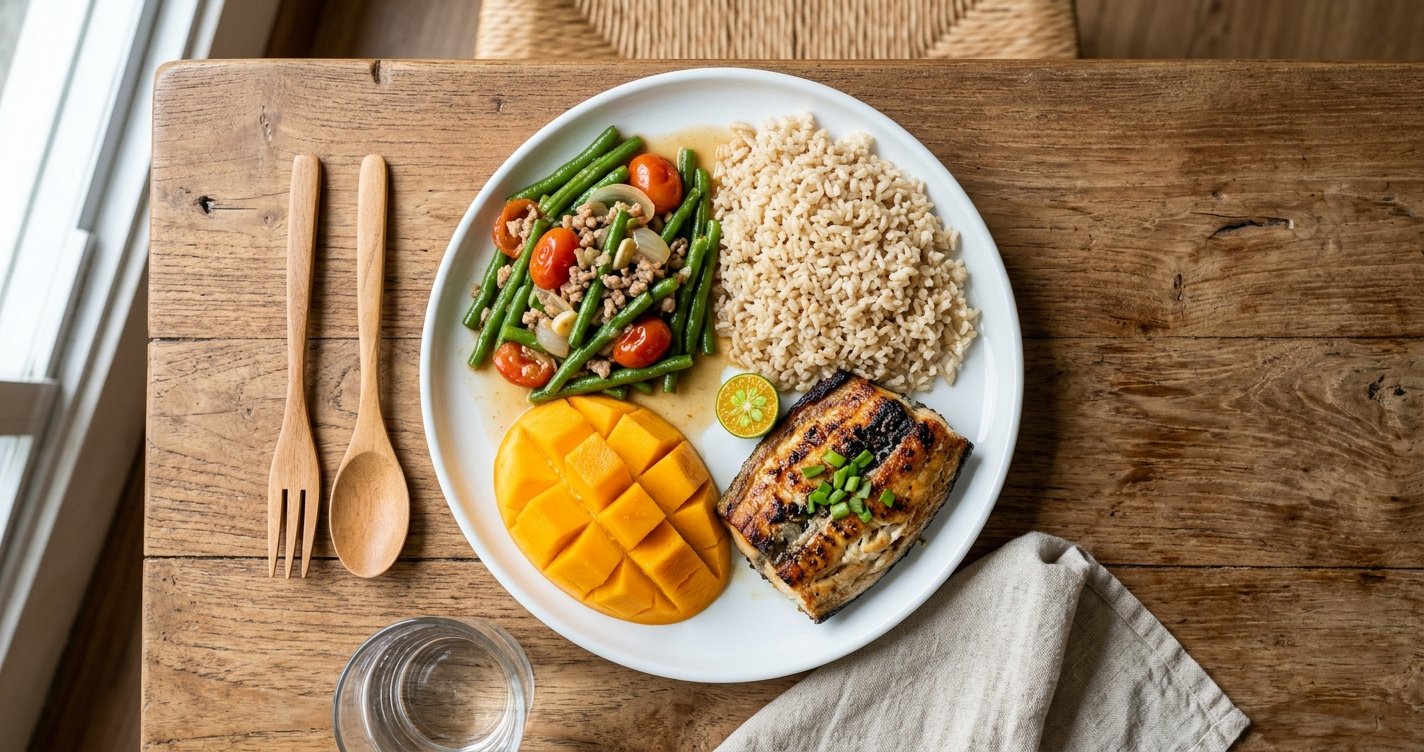
Pinggang Pinoy: The Filipino Plate
MyPlate was designed for Americans. Our diet, culture and palengke are different. So the Food and Nutrition Research Institute (FNRI) of the DOST created Pinggang Pinoy, a per-meal guide for the average Filipino adult:
- Go (energy): about one third of the plate for rice, corn, root crops or bread. Choose brown rice or other whole grains when you can.
- Grow (protein): about one sixth for fish, lean meat, eggs, tofu or beans.
- Glow (vitamins and minerals): half the plate for gulay and prutas, with vegetables taking the bigger share.
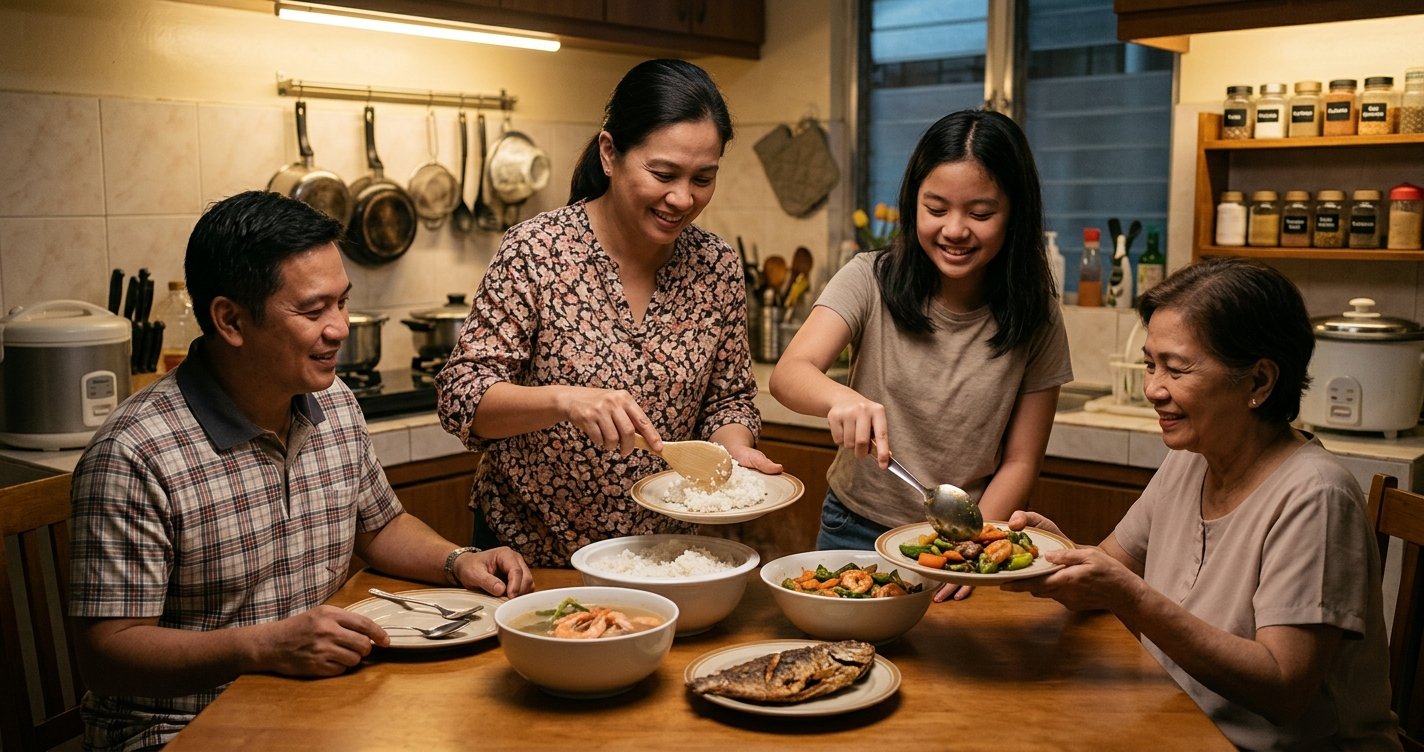
It respects that kanin is a staple while teaching portion control and putting vegetables front and center.
Adjusting the Plate for Your Fitness Goal
Pinggang Pinoy is built for the general population. If you lift weights or train hard, you’ll likely need to adjust it:
- More protein. The International Society of Sports Nutrition recommends 1.4 to 2.0 g of protein per kg of body weight per day for most people who exercise. That usually means a bigger “Grow” section than one sixth of the plate.
- Fat loss: keep the vegetable half, make the protein portion bigger, and trim the rice slightly. Don’t cut rice out completely if it helps you stay consistent.
- Muscle gain: keep the protein high and add more “Go” foods around your training sessions to fuel performance.
When the plate stops being enough, the next step is tracking your calories and macros so your portions match your actual needs.
Your Plate, Your Journey
The shift from the Food Pyramid to MyPlate and Pinggang Pinoy shows our understanding getting better, not worse. Use the plate as your daily default, adjust it for your training, and stay consistent.
Guides like this give you a strong foundation. But the fastest progress comes when your nutrition is matched to your body, schedule and goal. If you want a plan built around real Filipino food and your training, team up with an online fitness coach in the Philippines.
Lezzgo!