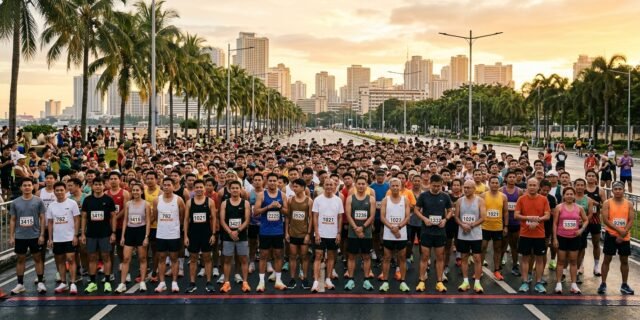

Bulking has a bad reputation in the Philippines. For many lifters it means “kain lang nang kain”: eating everything in sight and hoping the extra weight turns into muscle. Usually it turns into a bigger belly instead.
A lean bulk is different. You eat a controlled surplus, hit your protein every day, and train hard enough to give your body a reason to build muscle. Here is exactly how to do it, with a full sample day using food you can buy at any grocery or palengke.
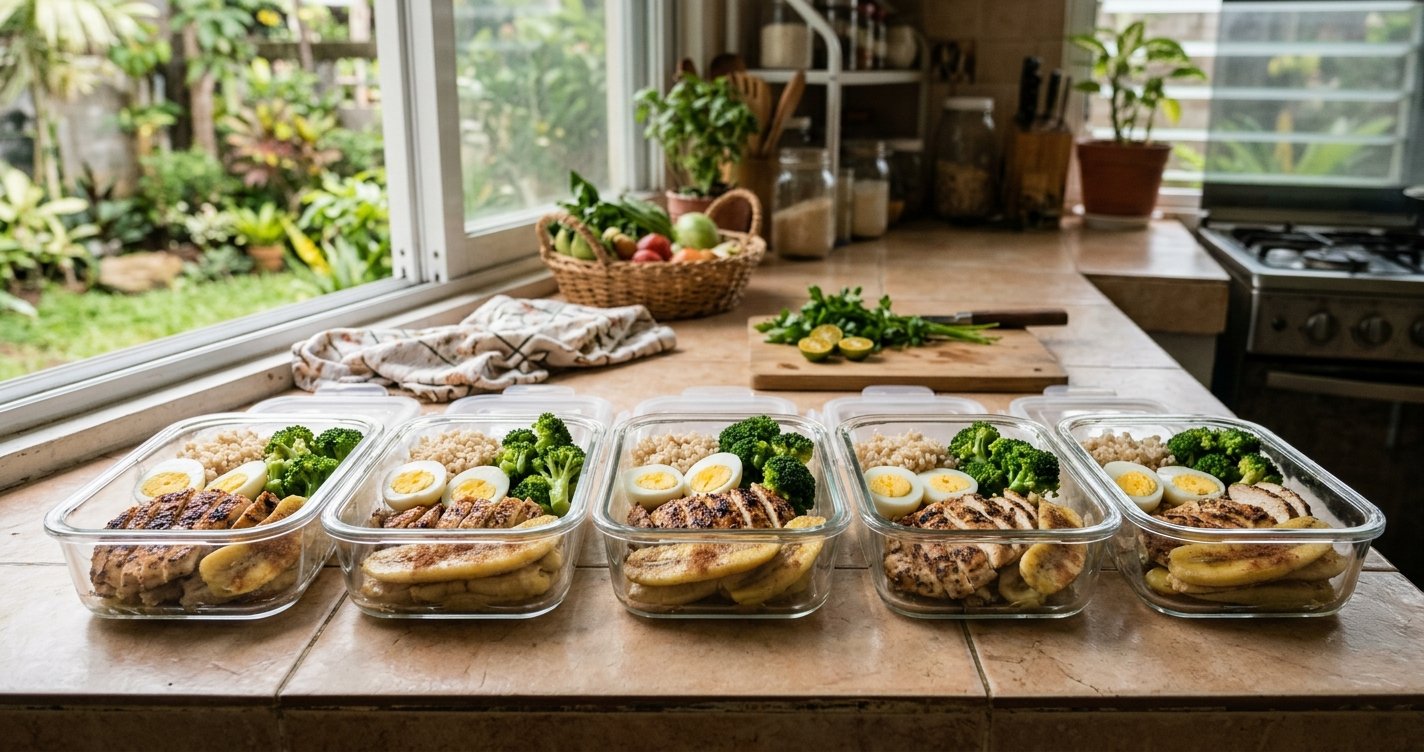
Step 1: Eat a Small Surplus, Not a Huge One
A narrative review on nutrition for bodybuilders in the off-season recommends eating about 10 to 20% above maintenance calories and aiming to gain roughly 0.25 to 0.5% of your body weight per week if you are a beginner or intermediate lifter. Advanced lifters should be even more conservative.
For a 70 kg lifter, that is about 0.2 to 0.35 kg per week. If the scale climbs faster than that, you are mostly gaining fat.
Step 2: Set Your Macros
| Macro | Daily target | Example for 70 kg |
|---|---|---|
| Protein | 1.6 to 2.2 g/kg | 112 to 154 g |
| Fat | 0.5 to 1.5 g/kg | 35 to 105 g |
| Carbohydrates | 3 to 5+ g/kg (the rest of your calories) | 210 to 350+ g |
Why not more protein? A large meta-analysis in the British Journal of Sports Medicine found that gains in lean mass from protein supplementation leveled off at around 1.6 g/kg per day. Going way above that mostly costs you money. Spend the extra calories on carbs that fuel your training.
Step 3: Spread Your Protein Across the Day
The same review suggests about 0.40 to 0.55 g/kg of protein per meal, across 3 to 6 meals, including the meals before and after training. For a 70 kg lifter, that’s roughly 28 to 38 g of protein per meal.
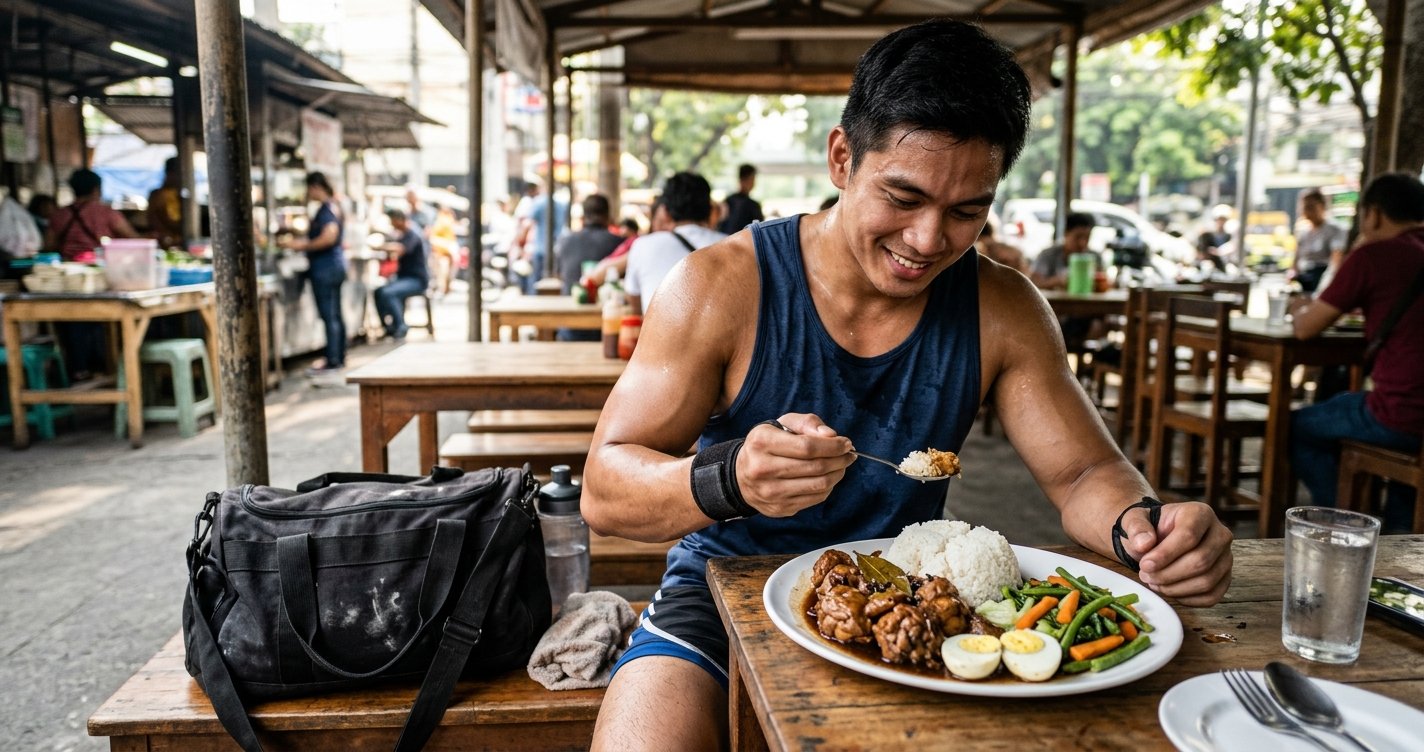
Sample Lean Bulking Day (70 kg lifter, about 2,800 calories)
Portions are approximate. Adjust up or down based on your weekly weight trend.
Meal 1: Breakfast
- 3 whole eggs + 3 egg whites, scrambled with tomatoes and onions
- 1 cup cooked rice or 3 pieces pandesal
- 1 banana
Meal 2: Mid-morning
- Overnight oats: 1/2 cup oats, 1 cup milk, 1 scoop whey protein, 1 tbsp peanut butter
Meal 3: Lunch
- 150 g chicken breast or thigh adobo (less oil)
- 1 1/2 cups rice
- Ginisang gulay (pechay, sitaw or kangkong)
Meal 4: Pre-workout (1 to 2 hours before)
- 2 pieces saba or 1 medium kamote
- 1 cup Greek yogurt or a protein shake
Meal 5: Dinner (post-workout)
- 150 to 200 g grilled bangus, tilapia or lean pork
- 1 1/2 cups rice
- Sinigang vegetables or a side salad
Optional: Before bed
- 1 glass of milk or a casein shake, plus a handful of peanuts
Lean Bulking Rules That Actually Matter
- Weigh yourself 3 to 4 times a week and track the weekly average, not single days.
- Train with progressive overload. Without it, extra calories won’t become muscle.
- Don’t fear rice. It is affordable, easy to digest and great fuel for training.
- Keep junk food as the exception. A lean bulk is not a license to live on milk tea and fried chicken.
- Sleep 7 to 9 hours. Muscle is built when you recover, not just when you train.
Guides like this give you a strong foundation. But the fastest progress comes when your nutrition is matched to your body, schedule and goal. If you want a plan built around real Filipino food and your training, team up with an online fitness coach in the Philippines.
Lezzgo!