
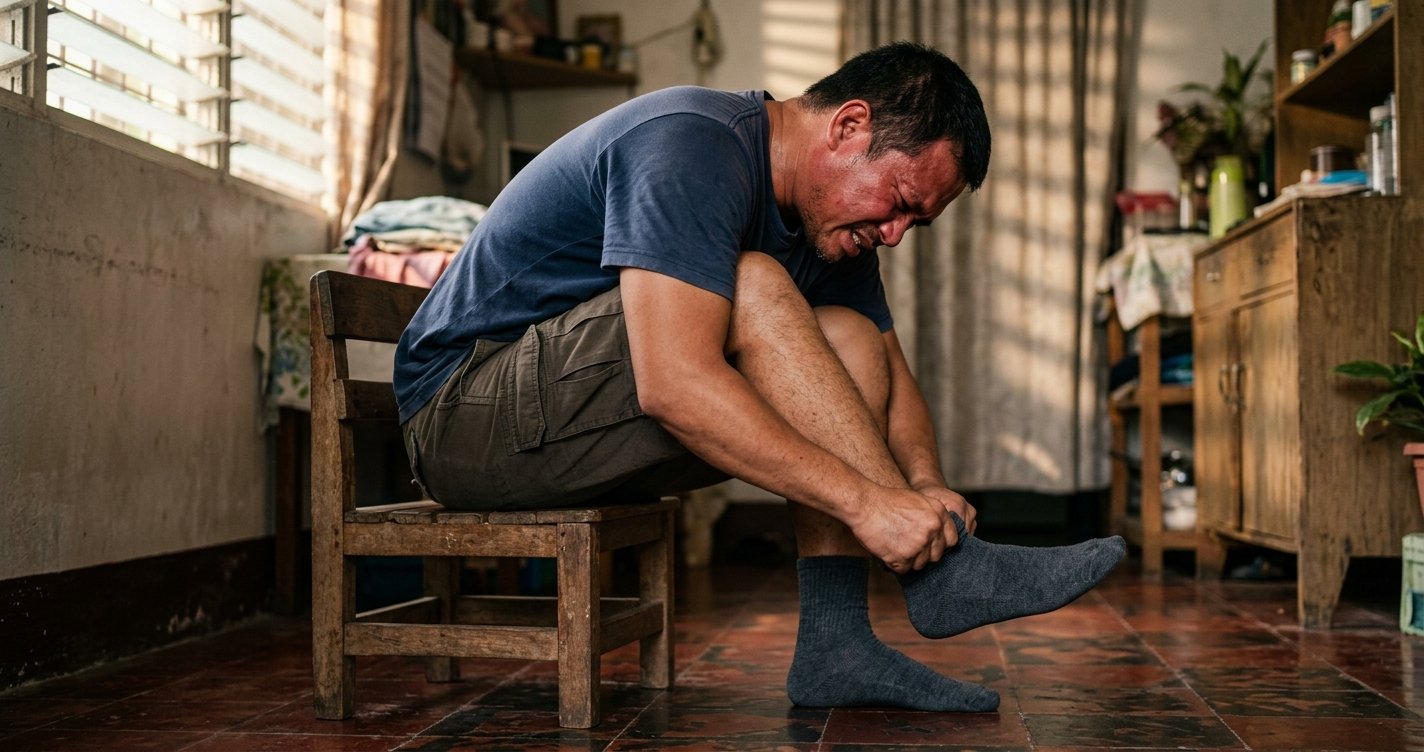
We’ve all been there. You’re rushing out the door for work or an errand. You sit on a stool—or maybe balance precariously on one leg if you’re feeling adventurous—and as you bend down to tie your shoelaces, you instinctively hold your breath. By the time you sit back up, you let out a heavy, exhausted sigh, as if you just completed a grueling marathon.
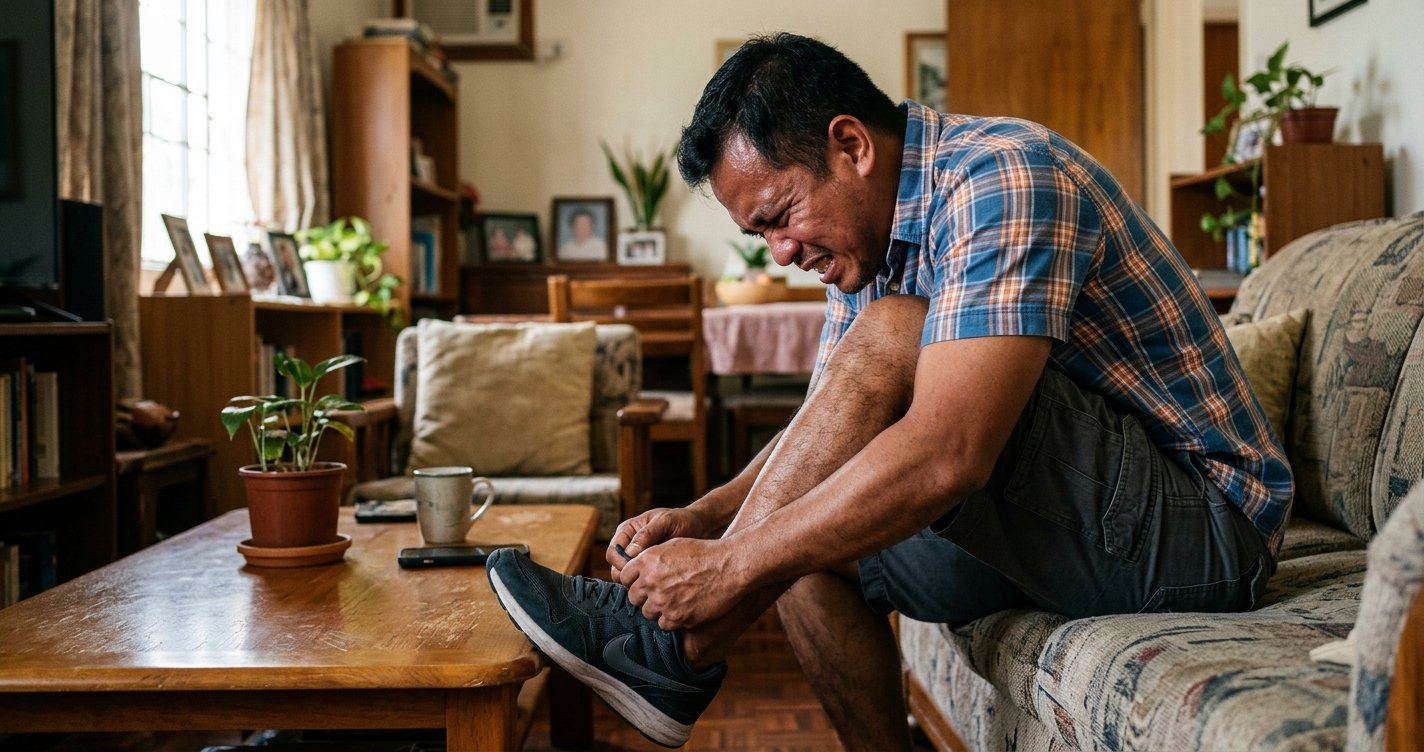
Among us Pinoys, this is often laughed off as a rite of passage into adulthood, a classic sign of aging, or the inevitable tito and tita life. We joke about it over family dinners, chuckle about our expanding waistlines, and brush it off by saying, “Ayun lang, tumatanda na talaga.” But let’s hit the pause button. Reframing this breathlessness and abdominal compression not as a funny inconvenience, but as an urgent reality check, might just save your long-term health and functional independence.
The Physiology of the “Shoelace Sigh”
Have you ever wondered why leaning over to put on a pair of socks feels like an Olympic sport? It rarely has to do with your age alone. Instead, it comes down to three main physical culprits: poor hip mobility, a severely deconditioned core, and sudden abdominal compression.
When you sit at a desk all day and lack proper hip mobility, your body forgets how to bend efficiently. To reach your feet, your body compensates by severely rounding the spine. This “crunching” of your midsection presses your abdominal contents directly up against your diaphragm. According to studies on respiratory mechanics and central adiposity, excess abdominal mass can severely restrict the downward movement of the diaphragm. When your diaphragm cannot properly contract and move downward, your lungs can’t expand. The result? A sudden, temporary shortness of breath that leaves you gasping once you finally sit up.
The Hidden Cost of Ignoring the Wake-Up Call
It is easy to dismiss this breathlessness when it only happens for a few seconds every morning. However, ignoring the “shoelace sigh” means ignoring a fundamental decline in your functional fitness. Functional fitness refers to your body’s ability to perform everyday activities safely and without undue fatigue. If tying your shoes is exhausting, imagine what happens when you have to carry heavy groceries up a flight of stairs or play with your kids on the floor.
Over time, neglecting these signs can lead to chronic lower back pain, posture problems, and an increased risk of injury from simple daily tasks. Your body is practically waving a red flag, begging you to start prioritizing basic mobility and core conditioning before the structural imbalances become permanent.
A Safe Space for The Intimidated Beginner
If you’re already feeling shy about your current fitness levels, realizing that you get winded from basic tasks can feel incredibly discouraging. I know how overwhelming the fitness world can be for a true beginner. When your baseline goal is simply to stop getting tired so easily and to improve your posture, the idea of walking into a commercial gym packed with seasoned lifters can be absolutely terrifying.
In fact, as a proud introvert myself, I completely understand the urge to “chicken out” when faced with a crowded weight room or group class. Most of my clients are introverts too. They often feel intimidated by complex equipment and the fear of being judged for doing an exercise incorrectly. This is exactly why they prefer a private, guided, and pressure-free environment.
You don’t need to hop on a treadmill in a public gym or decipher complicated fitness machines to fix the shoelace dilemma. What you need is a structured, at-home approach to foundational fitness—movements designed specifically to help you live your daily life without pain or exhaustion. It’s similar to the concepts I discussed in The Overpass Reality Check: Reclaiming Your Stamina One Step at a Time, where we tackle everyday physical struggles with small, highly actionable steps.
How to Reclaim Your Mobility and Core Strength
To stop holding your breath while bending down, we need to address the root of the problem systematically. Here are the three primary areas we target when you begin a foundational fitness journey:
1. Restoring Hip Hinge Mechanics
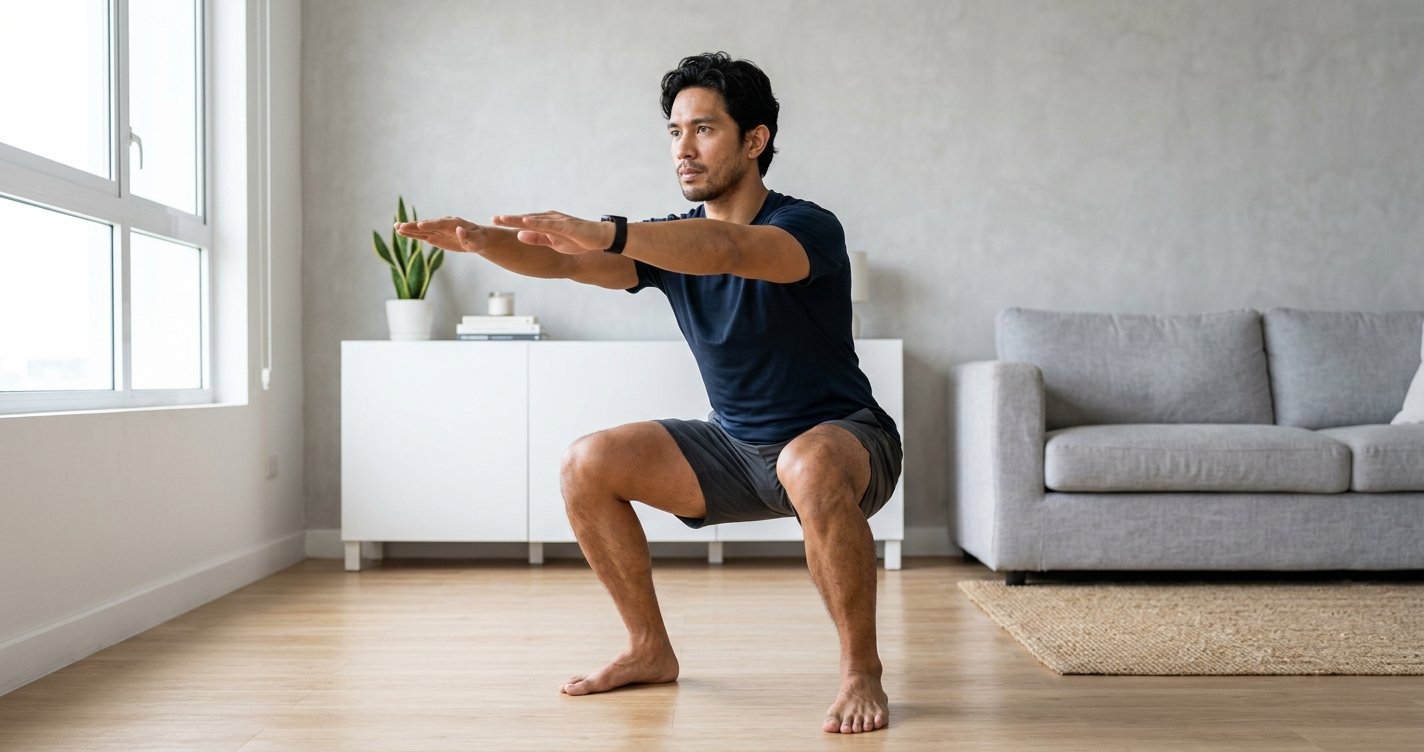
Instead of aggressively rounding your back to reach your feet, learning how to properly hinge at the hips gives your torso much-needed space. The hip hinge is a foundational movement pattern that not only helps you reach your toes efficiently but also protects your lower spine from debilitating injuries. Research published by Harvard Health emphasizes that functional exercises, specifically squats and hip hinges, are critical for maintaining physical independence, balance, and joint mobility as we age.
2. Strengthening the Deep Core
When most people think of core training, they imagine endless sit-ups to achieve six-pack abs. But functional core training is completely different. We are talking about deep core conditioning—strengthening the transverse abdominis and the pelvic floor. A strong, active core acts as a muscular corset, keeping your spine stable and upright. This ensures your internal organs don’t collapse inward and compress your diaphragm when you lean forward.
3. Managing the Midsection Sensibly
Let’s be completely honest: reducing abdominal fat plays a massive role in fixing this breathing issue. When there is less physical mass compressing your lungs and diaphragm, breathing during movement becomes significantly easier. However, extreme diets are never the answer.
As a certified NASM Coach, I ensure that my clients tackle their body composition through sustainable, enjoyable eating habits. Yes, that means you can still enjoy your favorite Pancit Canton or weekend fast-food treats in moderation while safely dropping body fat. It is all about strategic calorie management and consistency, not deprivation.
Taking Action Without the Gym Anxiety
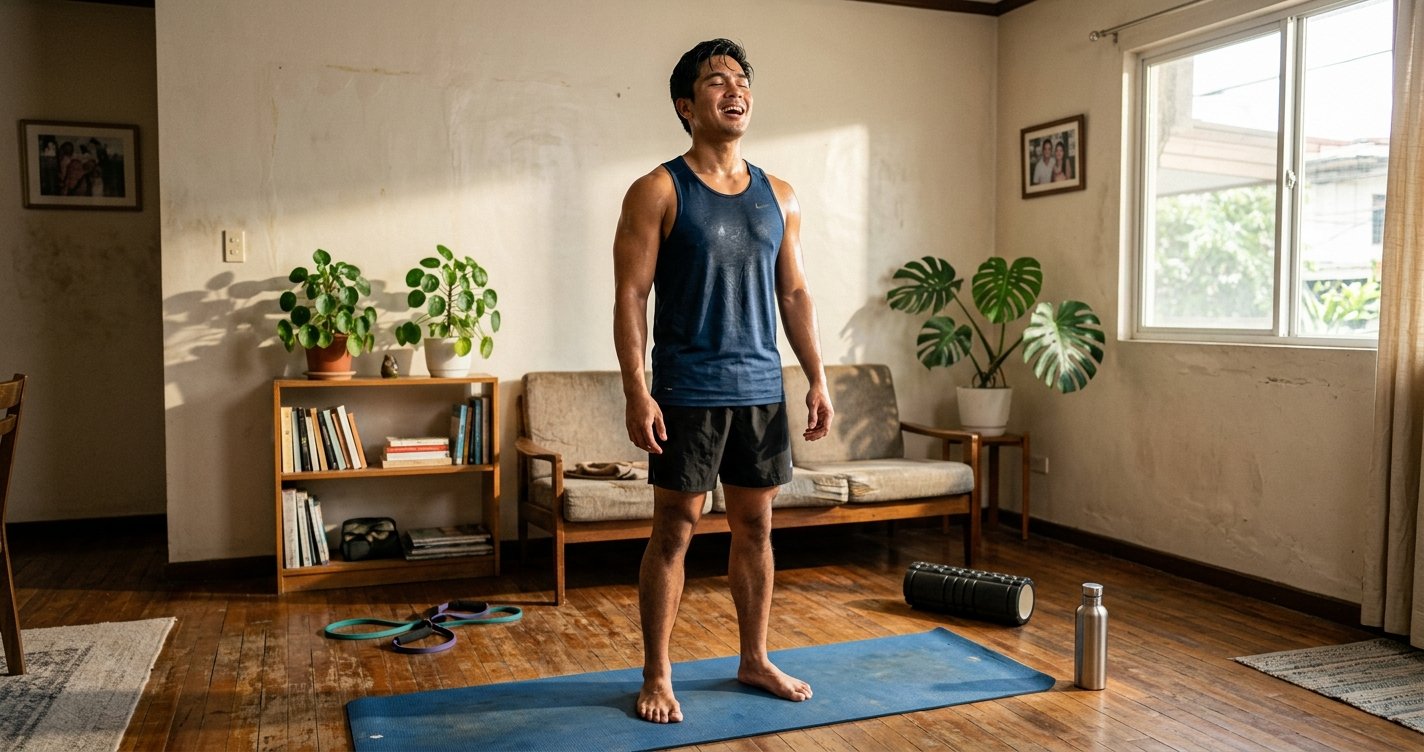
You do not have to suffer through breathless mornings or feel embarrassed about the simple act of tying your shoes. Reclaiming your basic hip mobility, building core strength, and losing that restrictive midsection weight is entirely possible—even if you have never formally exercised a day in your life.
If you are tired of the constant physical struggle but too intimidated to step into a local commercial gym, working with an expert online fitness coach Philippines trusts offers the perfect solution. You get expert guidance, customized routines designed for absolute beginners, and the comfort of doing it all in the ultimate privacy of your own home. There is no fear of judgment, no confusing gym equipment, and no intimidating crowds—just genuine, structured support to help you move better and feel healthier every single day.
It is time to stop normalizing physical discomfort. It is time to start taking small, intentional steps toward a stronger, healthier, and more mobile version of yourself. Are you ready to finally breathe easy and take control of your functional fitness? Lezzgo!
Ready to reclaim your health and functional fitness? Join #BodyByCoachJeff Online Coaching Program Today! Let’s build a customized, beginner-friendly plan that fits perfectly into your lifestyle and helps you ditch the shoelace sigh for good.