
Intermittent fasting (IF) has taken the health and wellness world by storm. It has become a go-to strategy for people looking to improve their health, simplify their mornings, and shed a few stubborn pounds. However, as with any popular diet trend, the rules can sometimes feel a bit blurry. The most common debate among fasting enthusiasts revolves around morning coffee—specifically, the addition of fats like butter or MCT oil. So, the ultimate question is: does MCT oil break a fast?
If you are a time-strapped parent or a busy professional, you already know that time is your most scarce resource. Your mornings are likely a chaotic blend of preparing kids for school, jumping into early work meetings, and trying to keep the household running. Sitting down for a full breakfast is a luxury you rarely have. This is exactly why intermittent fasting is so appealing. It buys you precious time. But when you need that extra boost of morning energy to survive the chaos, you might reach for a scoop of MCT oil to put in your black coffee. Are you ruining your hard-earned fasting progress by doing this?

Let’s dive deep into the science of fasting, how MCT oil interacts with your body, and whether you need to change your morning coffee routine.
What Exactly is MCT Oil?
Before we can determine if it breaks your fast, we need to understand what MCT oil actually is. MCT stands for Medium-Chain Triglycerides. These are a type of fat found naturally in coconut oil, palm kernel oil, and dairy products. Unlike long-chain triglycerides (LCTs) which make up the majority of the fats we consume in our daily diets, MCTs are metabolized entirely differently by the body.
Because of their shorter chain length, MCTs bypass the standard complex digestive process. They go straight to your liver, where they are rapidly broken down and converted into usable energy or ketones. Ketones are an alternative fuel source for your brain and body when carbohydrates are scarce. This rapid conversion is exactly why MCT oil is highly favored in the keto community and among intermittent fasters. It provides an immediate surge of mental clarity and physical energy without a devastating mid-day sugar crash.
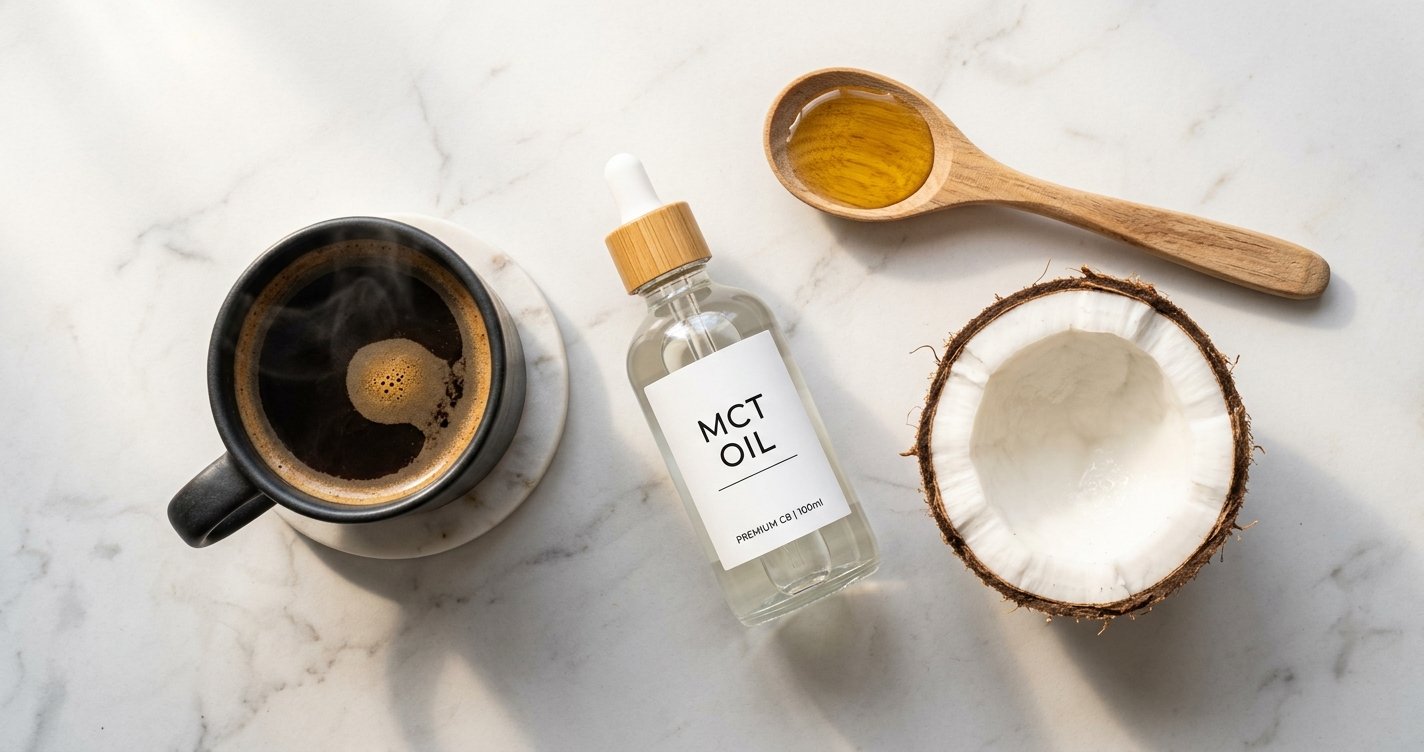
The Big Question: Does MCT Oil Break a Fast?
The short answer is: it depends entirely on why you are fasting in the first place. Fasting isn’t a one-size-fits-all physiological state; the body responds differently based on what you consume and what your ultimate goals are.
Scenario 1: You Are Fasting for Weight Loss and Fat Burning
If your primary goal is to lose fat, the underlying mechanism of intermittent fasting is keeping your insulin levels low. When insulin—the body’s main fat-storage hormone—is low, your body is forced to tap into its stored body fat for energy.
Here is the good news: pure fat does not provoke an insulin response. Since MCT oil is 100% fat and contains zero carbohydrates or protein, adding it to your morning coffee will not spike your insulin levels. In fact, by increasing your ketone production, MCT oil can actually help keep you in a prime fat-burning state. It acts as an incredible appetite suppressant, helping you push your first meal later into the day without feeling like you are starving. For those constantly typing “how to lose weight philippines” into their search bars looking for sustainable methods, using MCT oil as a bridge to extend your fast can be an incredibly effective strategy.
According to clinical insights shared by the Cleveland Clinic, MCT oil promotes a strong feeling of fullness, which prevents the mid-morning snacking that often derails a well-intentioned calorie deficit.
Scenario 2: You Are Fasting for Autophagy and Gut Rest
Now, let’s look at the other side of the coin. Many people fast for longevity, cellular repair, and a process known as autophagy. As explained by researchers at Johns Hopkins Medicine, autophagy is essentially your body’s internal recycling system, where it cleans out damaged cells and regenerates new, healthy ones. This process requires a state of deep nutrient deprivation to fully activate.
Does MCT oil break a fast in this context? Yes, absolutely. MCT oil is incredibly calorie-dense. A single tablespoon contains around 120 calories. The moment you ingest those calories, your digestive system wakes up, your liver goes to work processing the incoming fats, and autophagy comes to a grinding halt. If you are fasting to give your digestive system a complete rest or to maximize cellular cleanup, you must stick strictly to plain water, black coffee, or unsweetened tea. Any caloric intake, even pure fat, technically breaks a physiological fast.

Let’s bring this back to reality. Most of the people I coach are highly busy individuals—time-strapped parents, hard-working professionals, and postpartum mothers who desperately need a routine that doesn’t add more stress to their lives. When your schedule is packed from 5 AM to 11 PM with work obligations, traffic, and household tasks, demanding absolute perfection is the enemy of progress.
For a busy mom trying to regain her strength postpartum, preparing a perfectly balanced breakfast while managing a crying baby and prepping the older kids for school is often unrealistic. A cup of coffee blended with MCT oil takes less than two minutes to make. It provides instant brain fuel, curbs hunger, and gives you the energy to survive the morning chaos until you can finally sit down for a proper, nutrient-dense meal.
It’s all about finding what fits your lifestyle. If a splash of MCT oil is the secret weapon that stops you from breaking your fast with a sugary pastry at 9 AM, then it is a massive win for your long-term fitness journey.
Balancing Calories and Real Life
As an ISSA Certified Nutritionist (CNC), I always remind my clients that supplements and fasting protocols are just tools in your toolbox. They are not magic pills. Even if MCT oil keeps you in a “fat-burning state” during the morning, those 120 calories per tablespoon still count towards your total daily energy expenditure.
If you blindly consume three cups of MCT oil coffee throughout the morning, you could easily be drinking 300 to 400 calories without realizing it. If you are not factoring those calories into your daily intake, you might end up in a caloric surplus, completely stalling your weight loss efforts.
Fitness and nutrition should never feel like a prison. I always practice what I preach. Despite knowing the deep science of macros and fasting, I personally love a good, hearty plate of Pancit Canton on the weekends. I simply factor it into my overall caloric goals for the week. It’s all about creating a sustainable lifestyle that you can maintain for years, not just a few weeks. If you find yourself struggling with the timing of your meals, you might also want to read our article on The Truth About Late-Night Eating: What Science Really Says.
The Verdict
So, does MCT oil break a fast? If you are aiming for autophagy and complete digestive rest, yes it does. But if your goal is weight loss, energy management, and surviving a highly demanding schedule, MCT oil can be a phenomenal tool that keeps you satiated and focused without spiking your insulin.
At the end of the day, don’t stress over the minor technicalities. Focus on the bigger picture: eating nutrient-dense foods, staying in a slight calorie deficit if you want to lose weight, and finding a routine that makes you feel strong and capable. So—keep things simple and stay consistent with the habits that actually fit your life.
Lezzgo! -J
Ready to Transform Your Lifestyle?
Are you tired of second-guessing your diet and struggling to find a fitness routine that actually fits your packed schedule? You don’t have to figure it all out on your own. Take your free online coaching assessment quiz today to see if you qualify to join an online fitness coaching program like Body By Coach Jeff. Let’s build a sustainable plan tailored specifically for you!