
You know the exact moment it happens. You’ve been sitting at your desk for hours, answering emails or binge-watching your favorite series. When you finally stand up—lagitik! There it is. The infamous Tito or Tita knee crack, followed by a slight twinge of stiffness. If you are in your late twenties or thirties, this sudden symphony of joint noises can feel like a glaring sign of aging.
For many, this is the exact moment the “Tito Knee” trap springs shut. The immediate reaction is usually fear. You might think, “I’m getting too old for leg days. I better stop squatting before I completely ruin my knees.” This fear is especially paralyzing if you have little to no experience with formal exercise. If you are already intimidated by fitness, feeling an aray in your knees is the perfect excuse to sit on the sidelines and avoid the gym altogether.
The Intimidation Factor and the Myth of “Wear and Tear”
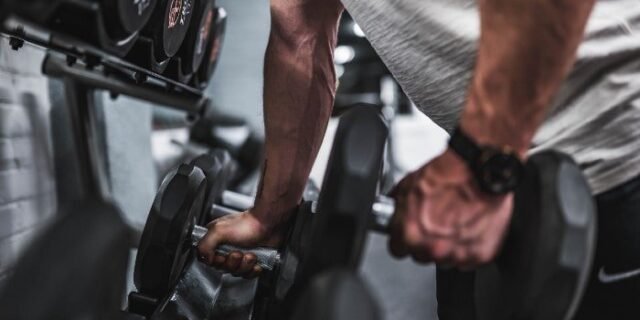
Let’s address the elephant in the room. The traditional gym environment can be incredibly overwhelming. Seeing experienced people lifting heavy weights and navigating complicated machines is enough to make anyone feel shy. Many beginners admit they tend to “chicken out” right at the gym entrance because they are afraid of being judged or doing an exercise with the wrong form.
When you combine this gym anxiety with the fear of joint pain, the result is complete physical inactivity. People start treating their joints like car tires—believing that the more you use them, the faster the tread wears out. But the human body does not work like a machine; it is a living, adaptable organism. Your joints actually crave movement to stay healthy.
According to research from Harvard Medical School, strength training not only builds muscle but also significantly strengthens the connective tissues around your joints. Avoiding movement doesn’t preserve your knees; it actually starves them of the synovial fluid needed for lubrication and weakens the surrounding support structures. In short, babying your joints is the fastest way to make them frail.
Reframing Leg Training: Your Ultimate Shock Absorbers
Instead of viewing squats and lunges as a threat to your knees, it’s time to reframe progressive leg training. Think of your leg muscles—specifically your quadriceps, hamstrings, and calves—as your body’s built-in shock absorbers.

When you walk down the stairs, jump, or even just stand up from a low chair, a tremendous amount of force is sent through your lower body. If your leg muscles are weak, that force bypasses the muscle and goes directly into your knee joints, cartilage, and ligaments. Over time, this unprotected impact is what leads to chronic pain and that dreaded lagitik.
By progressively training your legs, you are literally building thicker, stronger shock absorbers. When your quads and hamstrings are strong, they catch the impact before your joints ever feel it. Progressive leg training protects your knees for life. Plus, working out your lower body doesn’t just build physical strength. You can even read more about the amazing benefits of training your lower body in my previous post, Boost Your Brain: The Surprising Link Between Leg Workouts and Cognitive Health.
Why a Home Workout in the Philippines is the Perfect Solution
As an introvert who completely understands the overwhelming feeling of stepping into a crowded, noisy commercial gym, I get it. You don’t want to figure out how to use a squat rack while feeling like everyone is watching you. You just want to improve your posture, stop getting tired so easily, and learn the absolute basics of exercise in a safe, private setting.
This is the beauty of starting a home workout in the Philippines. You do not need an expensive gym membership or intimidating equipment to start protecting your knees. Your living room is the perfect sanctuary to focus purely on foundational, health-oriented movements without the fear of judgment.
Experts agree that supervised, structured at-home routines are highly effective. Studies highlighted by the Mayo Clinic show that targeted, low-impact resistance training significantly reduces knee pain and improves joint function for individuals who previously led sedentary lifestyles. You can achieve all of this right next to your couch.
How to Start Progressively (Without the Aray)
The key to dismantling the “Tito Knee” trap is starting slow. As a certified NASM Coach, I always ensure my clients focus on proper form and foundational strength before we even think about adding heavy weights. Here are three simple, knee-friendly exercises you can practice in your private space:
- The Glute Bridge: Lie on your back with your knees bent and feet flat on the floor. Squeeze your glutes and lift your hips toward the ceiling. This wakes up the muscles on the back of your legs, taking pressure off the front of your knees.
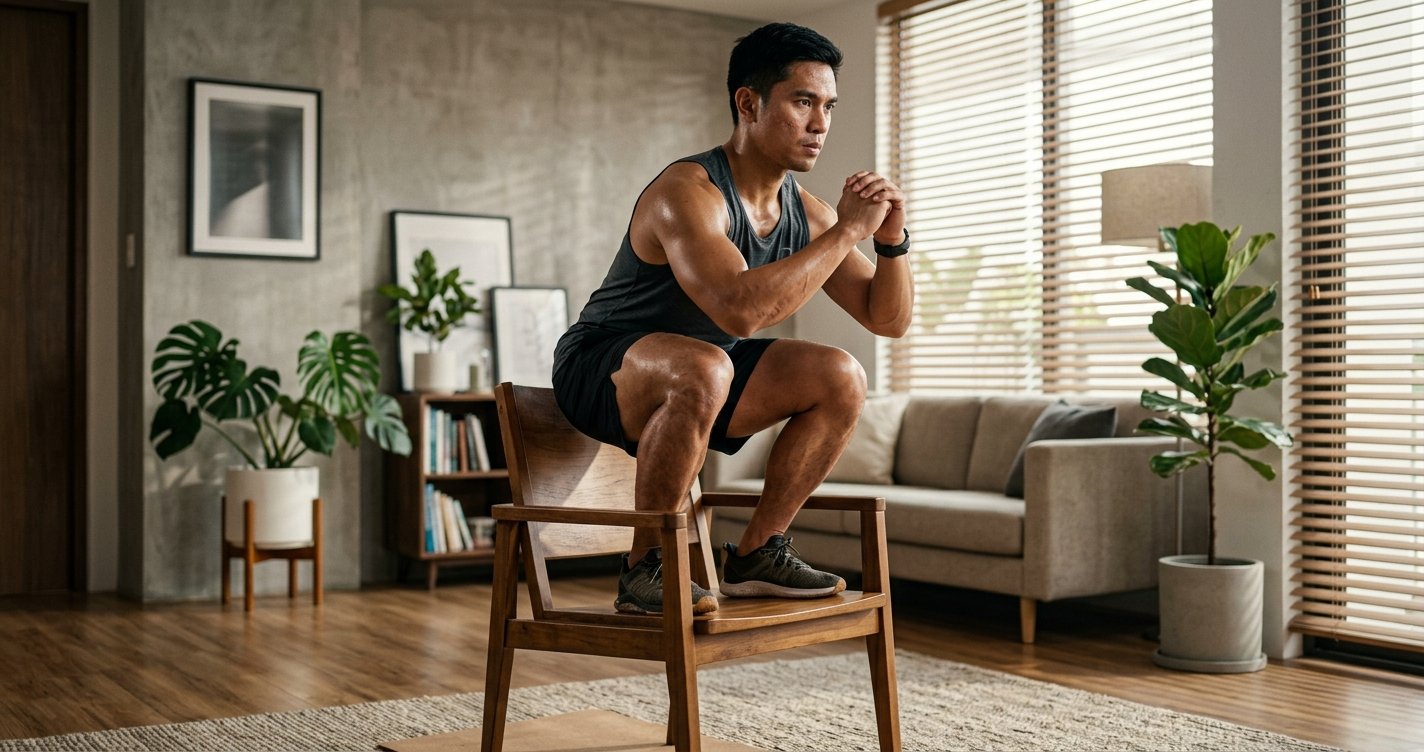
- Box Squats (or Couch Squats): Stand in front of a sturdy chair or your couch. Slowly lower yourself until your glutes touch the seat, then press through your feet to stand back up. This removes the fear of falling and teaches you the correct mechanics of a squat.
- Wall Sits: Lean your back against a wall and slide down until your knees are at a 90-degree angle (or higher if that’s too intense). Hold this position to build incredible isometric strength in your quadriceps, protecting the knee joint.

Embrace the Movement, Protect Your Joints
Experiencing knee creaks in your late twenties and thirties is not a death sentence for your fitness journey. It is simply your body’s check-engine light turning on, reminding you that it is time to build stronger shock absorbers. Stop babying your joints, stop fearing the gym, and start utilizing the privacy of your own home to master the basics.
Once you realize that exercise is not about punishing yourself, but about making your daily life easier and pain-free, everything changes. And ayun lang, you’ll find that taking care of your body is much simpler than you ever imagined.
Are you ready to stop letting gym intimidation and joint fear hold you back? Take the first step towards a stronger, pain-free life in the privacy of your own home. Take your free online coaching assessment quiz today to see if my personalized program is the perfect fit for you. Lezzgo!